I should change the name of this page from “Upcoming Titles,” to “One of these days, I’ll stop writing mysteries and try something new”. Until then, I’m working on the Suzanne Rickson Mystery series.
I’m currently working on book 3, titled “Death Comes Full Circle”. It’s the return on Regina Snow as she does the unimaginable, she asks Suzanne for help.
Here’s a peek at the beginning:
Death Comes Full Circle
Chapter 1
Sunday, October 13
Suzanne Rickson never swore. She couldn’t remember the last time she had. It was probably sometime in her teens.
She deeply understood the importance of each of the Ten Commandments, appreciating that even a minor infraction can have a profound impact on her life.
Thou shalt not take the name of the Lord thy God in vain.
Long ago, Suzanne had decided that any form of swearing would constitute a direct violation of the second commandment.
And yet, the words, “What the hell…,” escaped from her mouth. And to make matters worse, she did so in front of Father O’Brian. Her confidant and the very embodiment of her moral compass.
But this was his fault.
The betrayal stung deeply. She felt as though Father O’Brian had manipulated her into this moment. Why would he put her in such an unwanted position?
Only moments before, she had sat quietly in the pews of the church, absorbing his sermon with rapt attention. His voice had resonated through the hallowed space as he preached about the virtues of forgiveness—a recurring theme ever since the tragic murder of Adeline Wong nearly a year ago. Suzanne had once assumed, and now knew for sure, that these sermons were directed squarely at her. She was the lost sheep of his flock who needed to hear the words most.
She had suspected nothing when Father O’Brian requested to see her in his office after mass. It was not uncommon for them to speak alone. Charles also knew this and thought nothing of it. “I’ll meet you outside,” he said and walked away.
After the last of the parishioners departed the church, she followed Father O’Brian, her footsteps echoing softly against the stone floor, to a small office nestled beside the nave.
A tingle of fear ran through Suzanne, as if to warn her of danger. She steadied herself and remained silent for a moment after he opened the door to reveal a figure who had not attended mass and must have spent it quietly in wait. Like a great cat perched in a tree, ready to pounce on its unsuspecting prey.
And that’s when Suzanne Rickson uncharacteristically broke the second commandment. “What the hell is she doing here?” Her voice cut the stillness like a knife.
No one in the room seemed surprised by her outburst; perhaps they had expected it.
Father O’Brian, his expression ever so calm and unwavering, pleaded gently, “Suzanne, you need to hear her out.”
“I’m sorry, Suzanne, to surprise you like this,” Regina Snow said, her voice dripping with feigned sincerity like a seasoned politician or a sociopath.
Suzanne raised her palm to shush her, her heart racing as she turned to search for answers in Father O’Brian’s eyes. They gave nothing away. NO one was speaking. They were waiting for her to say something. She had been learning during the past year to think quickly on her toes. Why must God always test her like this? She promptly assessed the situation.
Regina had aged. She was a much older version of the person who had confronted her last Christmas. Her hair was thinning, and her face, which had once been so artifically flawless, now bore deepening wrinkles that etched across her profile like a map of her regrets. Suzanne wondered how such a vain creature could have let herself go so quickly. She was clearly suffering from the weight of her husband’s trial, which was about to commence. It was reported in the paper that Byron Snow intended to plead guilty to the first-degree murder of Adeleine and claimed that he was alone in doing so.
Suzanne knew this to be a falsehood. She knew, but could not prove, that his wife, Regina, was complicit after the fact and was integral in this attempt to frame Suzanne for the crime.
The injustice boiled her blood, but she had taken a grim sense of comfort in knowing that while Regina might escape earthly retribution, divine justice would eventually catch up with her. The thought had given her a fleeting sense of peace.
She also found solace in her belief that she would never be near that woman again.
And yet here Regina Snow stood. Not ten feet away from her. In a church, of all places. They shared the same air, each breath laced with resentment, as the urge to strangle her rival clawed at her sanity.
Suzanne took a breath. Father O’Brian was taking advantage of his uncanny ability to remain silent, allowing the weight of the moment to press down upon her. A make-shift plan formed in her mind. Clearly, she was not going to murder her rival. That would merely find them both rotting in hell, and chances are, the Devil’s punishment would be to lock them up together for eternity.
Regina had always been her long-time rival, a formidable opponent she often likened to Moriarty, the arch-nemesis of Sherlock Holmes, the brilliant detective. Suzanne should have anticipated that Regina wouldn’t simply fade from her life, as if she had been erased from the very pages of Suzanne’s story. Deep down, she knew that revenge was a dish Regina would serve cold, simmering beneath the surface until the perfect moment to strike emerged.
Despite her wishes, Suzanne had always known that this moment would come. But she had not calculated that Regina’s retaliation would include turning Father O’Brian against her.
No, that couldn’t be. He would never betray her.
Thus, Regina Snow must not be here to extract her retribution. It must be for something else.
As she locked eyes with Regina, Suzanne studied the discomfort radiating from her rival. Regina’s posture was tense, a stark contrast to her usual poise, and it seemed as if the weight of their strained history hung heavily in the air between them. She wants to be here even less than I do. It pained her to be standing face to face with the woman who had uncovered Byron’s scheme and the reason he was being sent to jail. Rightfully or wrongfully, it must still hurt.
“I need your help,” Regina said rather meekly. It could not have been easy for her to say it, and yet she repeated herself, more loudly this time, to ensure that Suzanne heard her. “I need your help.”
“Why would I ever help you?”
“Because you must,” Regina said, her tone a precarious balance of pleading and commanding. “Please hear me out.”
Suzanne summoned the Lord’s strength. She remained silent, but signaled with a curt nod for Regina to continue. Albeit, with a clear mark of skepticism that she could not hide.
“My son, Noah, is being blackmailed. Someone is claiming that they have proof that he’s having an affair. And they want a ludicrous amount of money to remain quiet.”
Thou shalt not commit adultery.
In theory, the sixth commandment should be the easiest one to obey, but it is too often treacherous in practice.
The apple doesn’t fall from the tree, Suzanne thought. Remembering that the cause of Byron’s ultimate sin was his wife’s betrayal.
The irony wasn’t lost on Suzanne; Regina had once leveled a false accusation against Charles, whispering doubts about his fidelity. And now she stands before me, asking to cover up her son’s transgressions. The nerve. Yet beneath her simmering resentment, Suzanne sensed an underlying current, an unarticulated truth that begged further exploration. She was curious by nature. Why is Regina involving me in her family’s affairs? There must be more to this story. So, Suzanne remained silent and stoic.
Maybe one day I’ll complete my collection of short stories.
The Modern Absurdist

“The truth is rarely pure and never simple.”
― Oscar Wilde
A man gets a second chance when he is re-incarnadined as an elephant, an atheist consults a priest about her stigmata, and a family pet is cloned after it’s death. These are all stories in my upcoming collection, The Modern Absurdist.
Or maybe one day I’ll finish the biography I started about my grandmother.
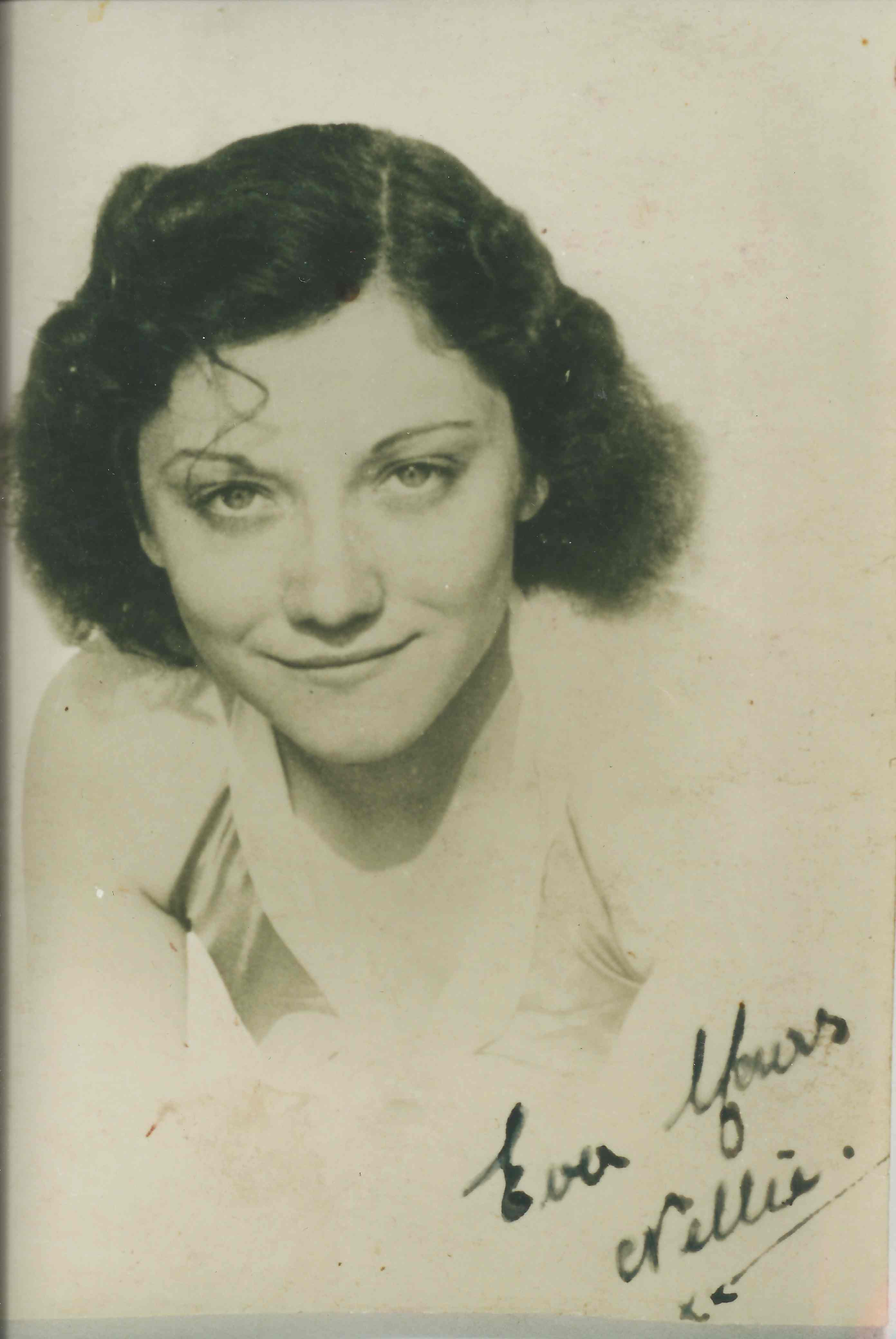
Ever Yours, Nellie
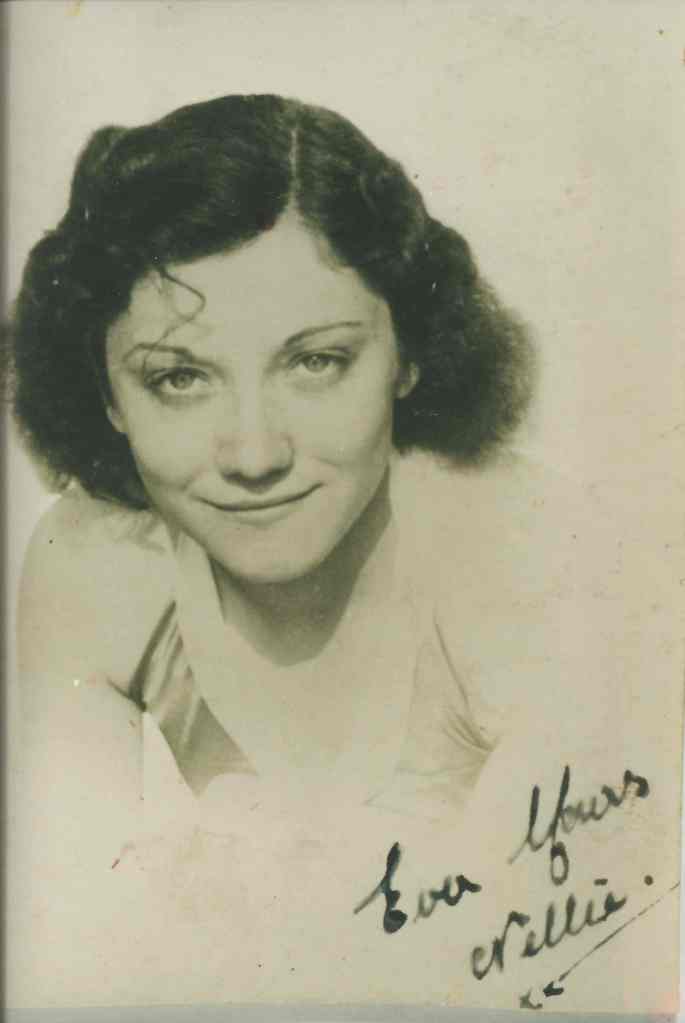
My grandmother grew up in a small English town. She lived in poverty most of her young life, but never considered herself poor.
She was a teenager during the blitz of England and enlisted as soon as she could. She meet my grandfather while in an Army hospital and emigrated to Canada as a warbride. She was hoping for an easier life in Canada, but she didn’t find one.
Her life was filled with love and tragedy. Her ability to endure almost anything is why I am compelled to to write her story.
It’s taken me several years to write it, and it’ll probably be several more years before I think it will be ready. Forgive me, I want to do justice to my grandmother’s legacy.
It will update this page on occasion with new content.
Staincross, South Yorkshire, England, 1924 – 1929
When I think of my early childhood, what comes to mind most is the sheer busyness of everyday life. Everyone in my family, including myself, had a full day of work. It was contented, happy work, but work nonetheless. My father, Charles Rickson, had three jobs. Six days a week, he did a twelve-hour shift at the local coal mine, the Wooley Pit. It took him three quarters of an hour to walk to and from the pit. To this day, I can still close my eyes and envision his hands. They were giant-sized and strong— cracked and stained black.
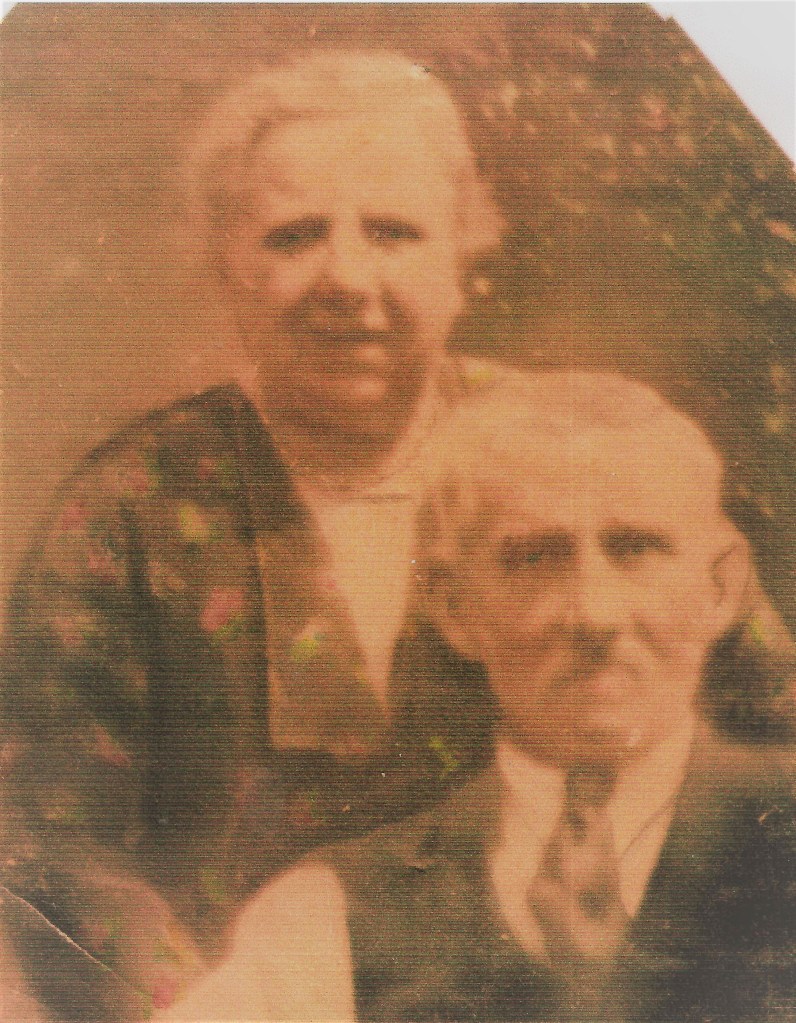
He and my mom, Mary Jane, were caretakers of St. John’s Parish Church. He was tasked with stoking the fires, digging the graves and helping with the heavy work. Lastly, Dad was employed by the farmer beside us, Mr. Webster. Among other things, Dad picked potatoes, carrots, turnips, and fruit. Mr. Weber would pay him with fresh meat, milk, fruits and vegetables.
Mom worked just as hard. She spent most of her day as the church caretaker. On top of all the cleaning and catering, Mom had to ring the bell for every service as well as weddings, christenings and funerals. When she was done at the church, she’d return home to do the daily house work.
All our washing was done by hand. Clothes were soaked, whites were boiled, then rubbed on a scrubbing board. My sister and I helped hanging out the clothes. We didn’t have hot water pouring out of a tap. Water had to be boiled in a set pot over a fire grate, which was built into the corner of our kitchen. The fire under the grate was always lit.
All the cooking was done by hand. Mom baked breads, cakes, pies and pastries. And don’t forget, this was ten years before the invention of the refrigerator. Everything was kept in an ice box.
We lived in two-bedroom house with a kitchen and living-room. I shared a bed with my sister, Sally, in the same bedroom as my parents. My brother, Joe, slept in the other bedroom. When I was young, my uncles Fred and Hubert and my Aunty Alice also lived with us. Where they slept I’ve no idea.
We had no bathroom. Toilets were in the out-house. Baths were taken in a large zinc tub in the kitchen. Many hours a week were spent filling and emptying the set pot. I filled it every night before bed.
Aunty Alice was the first to leave. She married a shop owner who had a grocery and flower store. Aunty Alice had a knack for money and quickly expanded the business. She hired my brother as a green grocer. He travelled by horse and cart throughout the county, selling fresh and prepared foods to rural areas. When I was a baby, Joe often carried me along with him in his travels. He took care of me while everyone else was at work. He sat me in a banana box, plopped me into the cart and off we went on our voyages throughout the English Moors.
I was still very young when Alice gave me my first job. I remember helping prepare fruits for jam, jellies and marmalades and vegetables for chutney, piccalilli, and pickled onions. I could keep some of it for my family, and the rest was sold on the cart.
I started school when I was four and a half, but this didn’t mean that I wouldn’t have to work anymore. When I was five years old, Mom recruited me to help at the church. I was tasked with dusting the chairs, putting out the prayer books, shaking the mats and sweeping. As I got older, I cleaned the brass and silver, swept the Sunday School and set it up for classes on Sunday. Dances were held in the Sunday School and some of them were catered by mother and Sally.
They baked all kinds of cakes, pastries and pies. We worked every waking hour and yet we were never sorry for ourselves. We even thought of ourselves as lucky, blessed with a good life. Of course, work was a way of life. I even took it for granted. I was never hungry and always clean and well dressed. Most of our entertainment centred around the church, garden parties, dances, card parties, day trips, concerts and even operettas. We once did Madam Butterfly. Sally was the Princess, Joe was the Lord High Executioner.
1930-1934
My dad chose my sixth birthday to take me hunting for the first time. He called it hunting, but more accurately it was poaching. We were shooting pheasant on the King’s land, near Cawthorne Hall. “Are you sure this is all right, Dad?”
“No one ever comes here, darling. It’s perfectly safe.” We trounced through the forest and he was right as always. There was not soul for miles around us.
Dad let me shoot that day. Of course, I had shot a shotgun before, but never at a live target. I hit the pheasant on my first try. Dad was thrilled. “You’re a natural shot, kiddo.” he said. As far as I knew, he had never taken Sally, or even Joe, out hunting with him. So, I felt very special.
Trudging back home, Dad announced that he had another present for my birthday.
Unbeknownst to me Dad had temporarily taken a fourth job to get me a very special gift. He had been working for our local doctor for several months. For payment, the doctor had given Dad his old piano, because he had bought a new one.
“But I don’t know how to play music,” I said. In truth, I had no desire to do so. I was busy enough with school and chores.
“Your cousin Francis will teach you. I have agreed to pay him a penny a lesson, once a week.” Dad looked pleased with himself, so I agreed to learn the piano. But it wasn’t fair. None of my older siblings had to learn music.
I would later discover that I had a knack for the piano and a keen ear for music, or at least Cousin Francis said I did. Regardless, I hated playing the piano but Dad was so proud of me and I loved to play for him.
When we returned home, the second-hand piano was in the living room. It should have been a festive event, but Mom took one look at Dad’s illegal bounty and there was hell to pay. She had quite a bad temper, but that day was the worst I had ever seen her.
At the time I was terrified, but now in hindsight it was a particularly amusing tirade. Mom was tiny, four foot eight and Dad was a lofty six foot two. He towered over her like Goliath standing over David. She yelled at him and carried on forever. “And you had to take Nellie with you too? You could have both been hung. What kind of birthday would that have been?”
To Dad’s credit, he didn’t say a word. He stayed cool and calm. When she was done he leaned over and kissed her. “Done now?” I will always remember my sixth birthday.
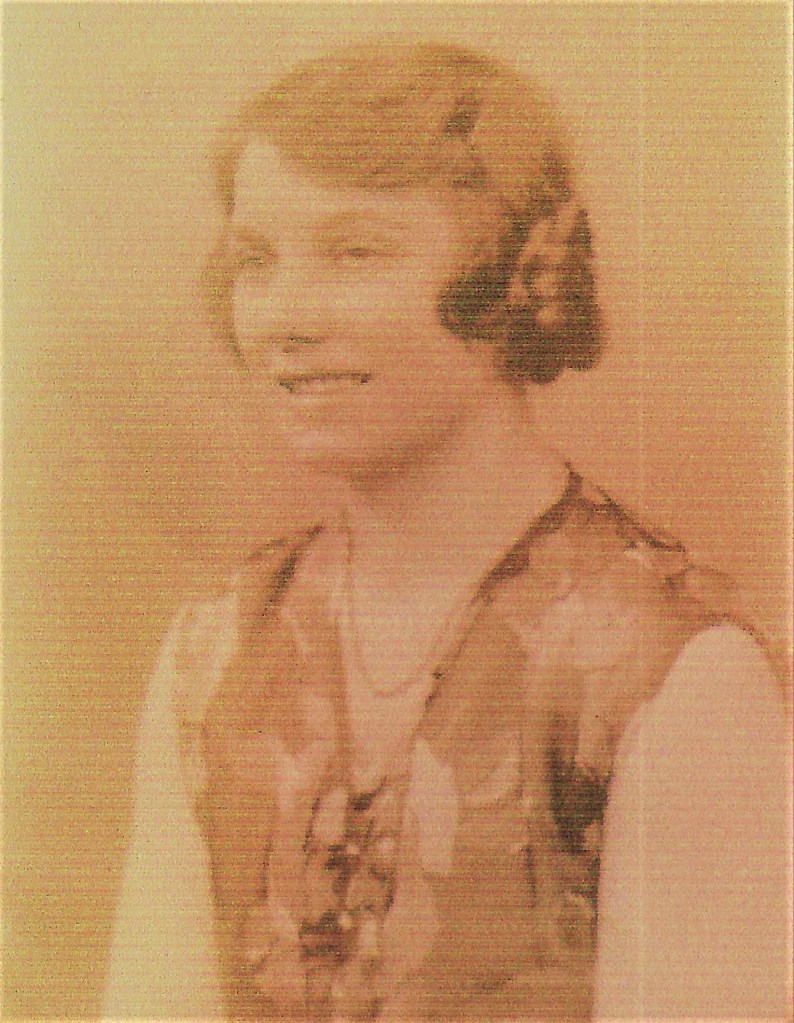
In contrast, my eighth birthday was nowhere near as eventful. I had been sowing the seeds of my intentions for months. My school grades were impeccable, I worked hard cleaning the church and helping Mom with the chores. On top of all of this, my piano playing was improving steadily. I had been doing my side of the bargain and I had made my wish very clear. All I wanted for my birthday was a bicycle.
Don’t get me wrong, I was never unsatisfied with all that I already had. Every year Sally would help Mrs. Shephard, who lived at Staincross Hall, with her spring cleaning. Luckily for me, Mrs. Shepard had two older daughters, so Sally brought home all their cast offs, including toys and clothing. Sadly, my sister never seemed to return home with the one thing I truly wanted, a bicycle.
The only mode of transportation for children my age was a bicycle. All my friends had one. I was certain that my beloved parents would have found a way to get me one, but I had been mistaken. Instead of a bicycle for my birthday, my parents got me a job.
By my ninth birthday, I had saved up about a third of its cost. At this rate, I might have been old enough to drive an automobile before I ever got my bike.
 Erik D'Souza